FEMA · Cross-Border Investment
Why Your Foreign Investment Is Stuck in the Bank (And How to Prevent It)
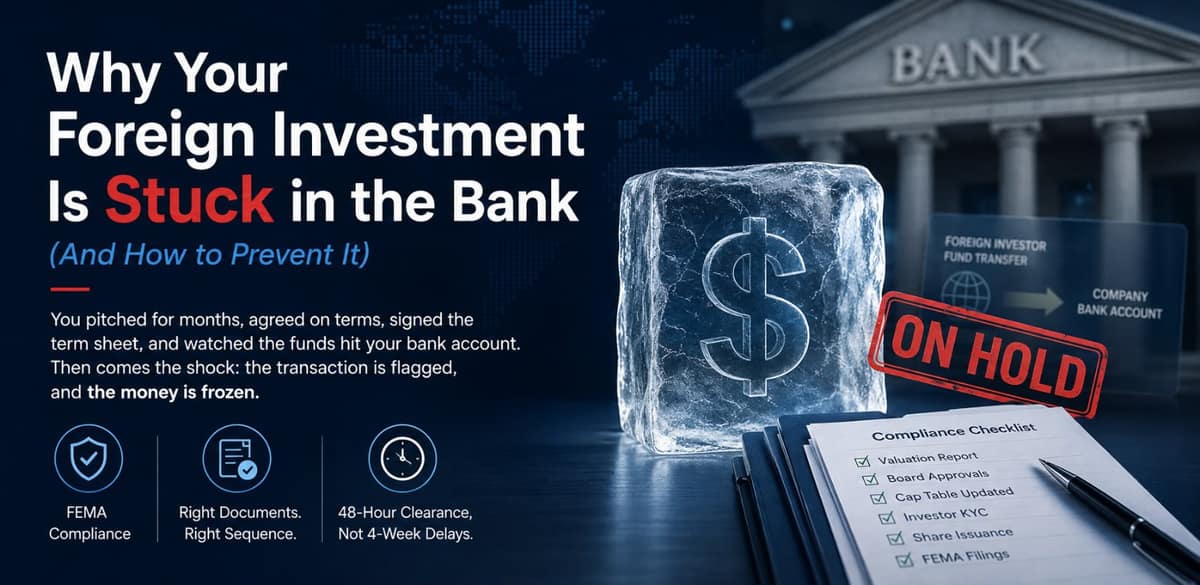
You pitched for months, agreed on terms, signed the term sheet, and watched the funds hit your bank account. Then comes the shock: the transaction is flagged, and the money is frozen.
Quick answer
Foreign investment gets frozen at the bank almost always because of a sequencing mistake, not fraud. Authorized Dealer banks are required under FEMA to verify the investor's source of funds, your cap table, and the transaction pathway before releasing inbound capital. If valuation, filings, and share issuance aren't aligned before the wire lands, the bank raises queries that can freeze the money for 2 to 4 weeks. Getting the valuation report, board approvals, and KYC documents in sync before the wire is sent brings clearance down to 24 to 48 hours.
Summary
- Banks aren't blocking your deal on suspicion of fraud. They're following an RBI-mandated compliance check under FEMA.
- The three things that trip this check are cap table timing, valuation mismatches, and document inconsistencies.
- Structuring compliance before the wire, not after, is the difference between a 48-hour clearance and a month of frozen capital.
There is no fraud involved, and your investor hasn't backed out. The holdup is routine bank compliance.
When foreign capital enters your company account, bank compliance officers cross-examine three critical elements: the investor’s source of funds, your cap table structure, and the transaction pathway. If any single detail fails to align, the capital can sit frozen for 2 to 4 weeks while the bank raises queries.
Meanwhile, vendor bills pile up, payroll dates approach, and your new investor starts questioning your operational readiness.
The real mistake: structuring backwards
Most founders treat regulatory compliance as a post-closing chore: close the deal, pop the champagne, receive the money, and then attempt to figure out FEMA guidelines, share valuation reports, and cap table updates.
When money moves before compliance is aligned, delays are almost guaranteed.
The 3 red flags that freeze foreign funds
- Cap table timing mismatches — adding the investor or issuing shares out of sequence before the inward remittance certificates (FIRC) and initial filings are synchronized.
- Valuation discrepancies — the price-per-share listed in your investment agreement not matching the exact valuation certificate generated for foreign exchange reporting.
- Document inconsistencies — slight naming or structural differences between the foreign inward remittance documentation, board resolutions, and bank filings.
The fix: structure before you remit
Avoiding bank delays comes down to reversing your sequence of actions.
The common mistake
Sign agreement → Wire money → Try to fix compliance
Result: 2 to 4 weeks of frozen capital, delayed vendor payouts, and high panic.
The clean compliance approach
Draft agreement → Align valuation and filings upfront → Wire money
Result: Smooth bank clearance in 24 to 48 hours with zero regulatory friction.
Taking one week of upfront planning before the wire transfer saves an entire month of operational headaches later.
Frequently asked questions
Why does the bank freeze the money even if the investor is genuine?
Authorized Dealer (AD) banks in India are legally mandated by the Reserve Bank of India (RBI) under FEMA regulations to verify valuation standards, investor credentials, and proper equity allocation before allowing inbound foreign capital into operational accounts.
What is the standard document sequence for receiving foreign investment?
Before wiring funds, ensure you have a valid valuation report issued by a qualified professional (such as a SEBI-registered Merchant Banker or Chartered Accountant, as applicable), board and shareholder approvals for share issuance, and consistent investor KYC documents matching the remitting bank account.
How long do foreign investment clearances usually take?
When all documents, valuations, and compliance pathways are aligned before the wire is initiated, bank clearance generally takes just 24 to 48 hours. When inconsistencies occur, resolution can drag out for 2 to 4 weeks.
Sources: Foreign Exchange Management Act, 1999 and RBI Master Directions on Foreign Investment in India; Companies Act, 2013 provisions on share valuation and allotment. This article is for general awareness and is not a substitute for advice on your specific transaction. Have questions regarding inbound capital compliance? Get in touch with us.